



We have walked through Jesus’ words on the Mount of Olives and used them as a map and timeline of the events that will happen at the end of the age, beginning with the regional conflict in the Middle East over Israel and especially Jerusalem. Though that is the center of the conflict, we have now traced it spilling into the rest of the world. War, violence, persecution, economic woes and deception all spill over, but there is a much greater moment that impacts the whole world.
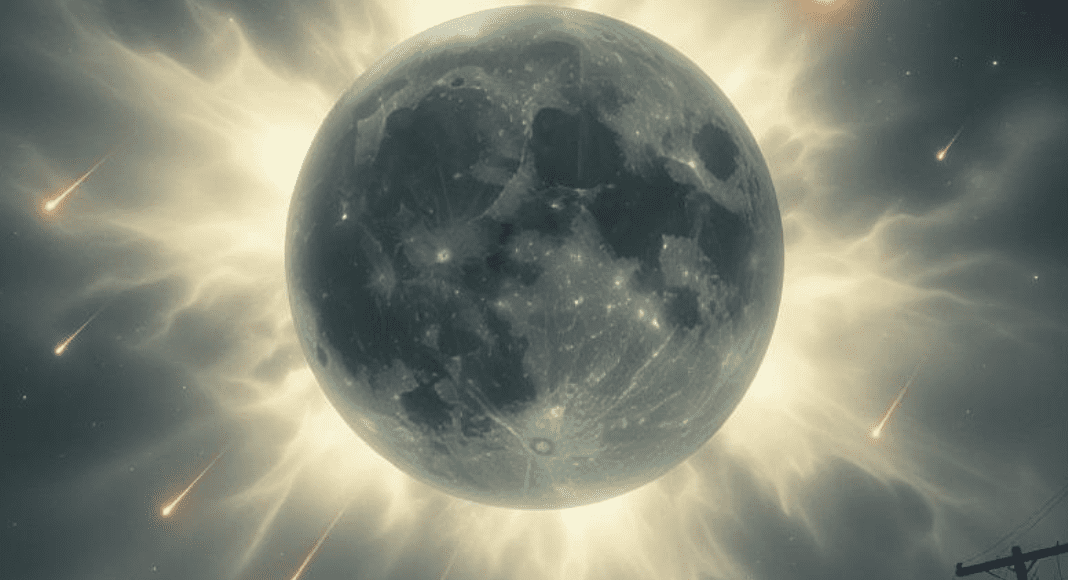
We find this in Matt. 24:29-30(NIV): “Immediately after the distress of those days,” He said, “the sun will be darkened, and the moon will not give its light; the stars will fall from the sky, and the heavenly bodies will be shaken. Then will appear the sign of the Son of Man in heaven, and all the peoples of the earth will mourn when they see Him coming on the clouds of heaven, with power and great glory.” This is the highlight. This is what it is all about. Jesus will return — and not in secret, not to a corner, not through whispers in the wilderness or rumors of inner rooms.
He will appear in the sky, and everyone will see Him — every eye and every nation. No one will mistake it, no one will spin it. The sky will rip open, and the King will be visible. That is the climax of the story.
This is the crowning moment of the story told on the Mount of Olives. The Messiah comes to defeat the final Gentile tyrant enemy of Israel. He comes and establishes His kingdom, making all things right. But before His appearing, the heavens themselves will collapse. The sun will go dark. The moon will dim. The stars will fall. This is not a metaphor. This is a calamity that engulfs the entire world, the culmination of a string of natural disasters and celestial judgments that Revelation describes in detail. These are not confined to the Middle East, unlike the wars and coalitions. These judgments spill out everywhere — touching every coast, every people, every economy.
Notice the timing. Jesus says, “immediately after the distress of those days.” That distress is the Great Tribulation — the time when the final Gentile tyrant reigns, when deception surges, when the covenant is broken, when persecution is unleashed. It is the reign of Antichrist, empowered by the false prophet, deceiving the nations with lying wonders. That season is cut short, Jesus says, for the sake of the elect. And as it ends, the heavens begin to fail.
The prophets saw this long before Jesus spoke it on the Mount of Olives. Isaiah said the stars would not give their light, the sun would be dark at its rising and the moon would not shed its glow. Ezekiel said that when Egypt was judged, the heavens themselves went dark. Joel said the sun would turn to darkness and the moon to blood before the Day of the Lord. Amos said God would cause the sun to set at noon, casting gloom across the earth. Over and over, cosmic signs were the shorthand for divine judgment, the signal that the Day of the Lord had arrived.
This sign is one of the most prevailing of the last days narrative in the Bible. Revelation takes the same language and multiplies it. The sixth seal describes the sun turning black, the moon like blood, the stars falling and the sky vanishing like a scroll. Later, the trumpets strike the heavens — a third of the sun, moon and stars darkened. The bowls finish it — the sun scorching men, the beast’s kingdom plunged into darkness, the greatest earthquake in history, tearing the world apart, hailstones crashing down. The cosmic signs aren’t one moment — they are the climax of a series of judgments, a cascade that crescendos with Jesus’ appearing.
So don’t mistake the flow. First, the regional war. Then persecution and deception. Then, the economic collapse of Babylon. Then the heavens shake. Each step spills wider, from Israel to the nations, from armies to markets, and finally to the very lights above. Jesus didn’t give us poetry — He gave us a countdown.
And this matters. Because everything in our age tempts us to think we can control it — wars with diplomacy, famine with technology, even weather with policy. But when the heavens themselves go dark, when stars fall, when the moon bleeds, no government can manage it. No economy can hedge against it. No propaganda can explain it away. It is God Himself shaking creation. It is the cosmic prelude to His Son appearing.
And that’s where the hope is. The calamities are not the end. They are the stage. The world collapses, the lights go out, and then — the King comes. Every eye will see Him. Every nation will mourn. Every lie will be exposed. The covenant-keeping God will answer every covenant broken by man.
The prophets weren’t vague. Jesus wasn’t vague. Revelation wasn’t vague. The sun will be darkened. The moon will not give its light. The stars will fall. The heavens will shake. And then the Son of Man will appear in the clouds with power and great glory. That is the hinge. That is the hope.
The calamities are coming. The earth is already trembling. The signs are already foreshadowed in our generation. But the end is not despair — it is His return. And in the next articles, we will trace how the rest of the judgments — the earthquakes, the fire, the hail, the collapse of every mountain and island — tie together with this final cosmic darkening. Because every one of them is a flag on the map pointing to the same destination — the day the King comes in the clouds.
