



We’ve followed Jesus’ map across the Mount of Olives — from the first tremors of war around Jerusalem to how it spilled into the world, the gathering and finally, the appearing of the Son of Man on the clouds. Every verse of Matthew 24 has moved us from warning to wonder, from the storm to the sight of the returning King.
In Matt. 24:32, where we have arrived, it would seem the list of signs and actions has ended, and for the rest of that chapter and the next, Jesus just gives application, but I believe there is one more point of action. In Matt. 25:31-32, the scene shifts. The battle is over. The false kings have fallen. The King has come home. And He sits down — “When the Son of Man comes in His glory, and all the angels with Him, then He will sit on His glorious throne. All the nations will be gathered before Him” (CSB).
This is not a parable about kindness; it is a prophecy about judgment. Jesus doesn’t say, “The kingdom of heaven will be like…” as He does with His parables. He speaks as Daniel once saw as he stated, “…One like a Son of Man was coming with the clouds of heaven… He was given dominion and glory and a kingdom…” (Dan. 7:13–14) The imagery of sheep and goats is symbolic, but the event is literal — the moment when the enthroned Messiah judges the living nations after His return.
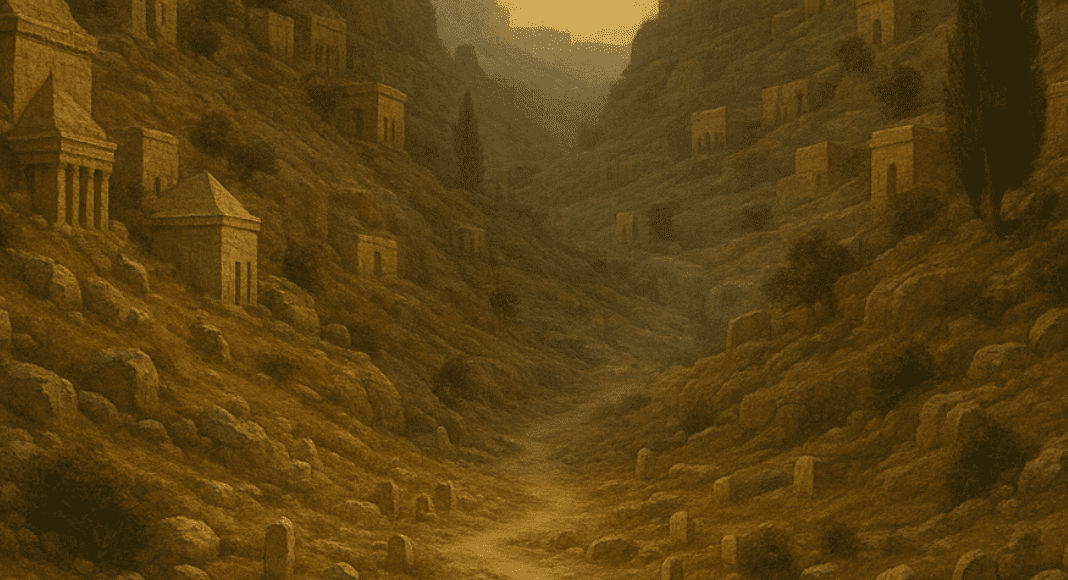
The prophets all foresaw this day. Joel called it the Valley of Jehoshaphat — “the Valley of Decision.” Zechariah said the Lord would go forth and fight against the nations surrounding Jerusalem, with His feet standing on the Mount of Olives. Isaiah declared that the Lord would come to punish the world for its evil. Daniel saw the court sit and the books opened. The same geography, the same Judge, the same issue — how the nations treated God’s people when Jerusalem was under siege.
The sequence fits the map of prophecy. Revelation 19 shows the Rider on the white horse defeating the Beast and false prophet. Then the surviving nations face judgment before the kingdom begins. This moment in Matthew 25 likely corresponds to the post-Armageddon judgment of survivors — distinct from the Great White Throne judgment in Revelation 20, which occurs after the thousand years. This is the inaugural reckoning as the King establishes His reign.
The charge is clear. The nations are judged not by sentiment but by allegiance — how they treated the King’s brothers in their hour of trial. “Truly I tell you,” Jesus says, “whatever you did for one of the least of these brothers and sisters of mine, you did for Me” (Matt. 25:40). In Matthew’s gospel, “My brothers” always refers to those who belong to Him — His disciples, His followers, His covenant people. In the tribulation, that remnant will include both Jewish believers and Gentile witnesses who hold fast to His name. Yet, in the immediate context of Jesus’ words and the prophetic backdrop of Joel and Zechariah, this phrase most directly points to the covenant people of Israel — those besieged and suffering in the land. They will be the hunted ones, the prisoners, the hungry, the dispossessed. Zechariah foresaw it — half the city taken into captivity. Revelation shows it — saints imprisoned, some executed, some in hiding. When the Beast rules, mercy becomes treason — to feed, clothe or shelter one of these will be an act of rebellion against the system of the world.
Those who risked everything to stand with them will be called the sheep. Those who turned away, who sided with the persecutors or sought safety in silence, will be the goats. The metaphors are simple, but the reality is not — this is a courtroom, not a story. The Son of Man sits as Judge. Angels flank the throne. The nations stand assembled. The King reads the evidence written in compassion or cowardice.
“I was hungry and you gave me something to eat; I was thirsty, and you gave me something to drink… I was in prison and you visited me” (Matt. 25:35-36).
Each phrase mirrors the afflictions of the tribulation — famine, deprivation, imprisonment, exile. These are not random humanitarian examples — they align with the conditions of that dark hour. The dividing line runs through the conscience. To aid the persecuted is to stand with the King; to betray them is to side with the Beast.
Then comes the verdict. “Come, you who are blessed of my Father, inherit the kingdom prepared for you from the foundation of the world” (Matt. 25:34). These are the survivors who enter the Millennial Kingdom — the meek who refused to bow to evil, the merciful who dared to defy tyranny. To the others, He says, “Depart from Me, you who are cursed, into the eternal fire prepared for the devil and his angels” (Matt. 25:41). These are the ones who chose self-preservation over allegiance, comfort over conviction. The judgment is swift. The destinies are final.
Every prophecy has led to this moment. Deuteronomy 32 promised that the Lord would judge His people and avenge the blood of His servants. Psalm 2 declared that the nations that raged against the Lord’s Anointed would be broken with a rod of iron. Isaiah 24 saw the earth reeling like a drunkard under judgment. Daniel 7 revealed the court seated and dominion given to the saints of the Most High. All these visions converge in Matthew 25. The throne in Zion is the same throne Daniel saw in heaven, now grounded on the soil of Israel.
The geography of the story never changed. It began with armies surrounding Jerusalem and ends with the Judge enthroned within it. The siege becomes the setting of salvation, and the battlefield becomes the bench. The land, once divided, now becomes the center of divine justice. This is the fulfillment of the covenant through the Messiah — not replacement but restoration. The promises to Israel expand under the rule of her King. What the prophets saw in poetic vision, the Messiah brings to reality.
Joel called it the Valley of Decision, but the decision belongs to the King. The nations are weighed in His balance. Their treatment of His people and His witnesses exposes their hearts. The sheep are gathered to inherit the earth. The goats fall under the same curse that overtook the enemy powers. It is the end of rebellion and the dawn of righteousness. The war of the age closes not with another battle, but with a verdict that redraws the map of the world.
And for those who hear these words now, before that day arrives, the message is not distant. It is a call to allegiance. Jesus spent two chapters warning His followers to stay awake, to endure, to remain faithful. This judgment shows what that faithfulness looks like — standing with His people, showing mercy when mercy is costly, refusing to bow when truth is dangerous.
