



As with everything that happens in the Middle East, especially anything involving Israel, Trump’s latest peace plan between Israel, Gaza, and a few Arab partners didn’t just grab the news cycle — it shook the prophecy world. Whenever a leader touches Jerusalem, the land or the fragile hope of peace, everyone who knows the Scriptures feels that old tug in their chest: Is this it? And if you’ve been walking with me through these twenty-something articles, tracing the end times back to the regional conflict Jesus and the prophets described, then you know that instinct isn’t hysteria — it’s the right instinct. When the winds shift over Israel, we look up.
Because peace deals matter, biblically, they matter more than almost anything else. Jesus told us in Matthew 24 — and Luke fills in the edges — that two markers would signal the end of the age: the abomination of desolation and Jerusalem surrounded by armies. Both come from Daniel. Both belong to the same timeline. And wrapped inside those same passages is Daniel 9:27, the verse that has arrested the church’s imagination for centuries. The verse that says a coming ruler — the prince to come, the final Gentile tyrant — will “confirm a covenant with many” for seven years. Not create or invent — but confirm, shore up, strengthen and reaffirm something already in play, which sounds a whole lot like a peace deal.
So, when Trump’s plan hit the headlines — hostage releases, Israeli security guarantees, normalization with Arab states, economic incentives, multi-nation involvement, regional stabilization — every watcher asked the same question: Is this the covenant? And to their credit, many said “no.” And they’re right. The final figure Daniel describes hasn’t risen. The rise of the northern ruler and the southern coalition — Daniel 11’s storyline — hasn’t unfolded. Israel isn’t dwelling in the “peace and safety” Paul mentions. The daily sacrifices haven’t begun. The gates of Jerusalem haven’t been thrown open. Those pieces aren’t on the board yet. This peace plan isn’t the covenant, but here’s the part that should make you lean forward — It may well be part of the document that is eventually strengthened.
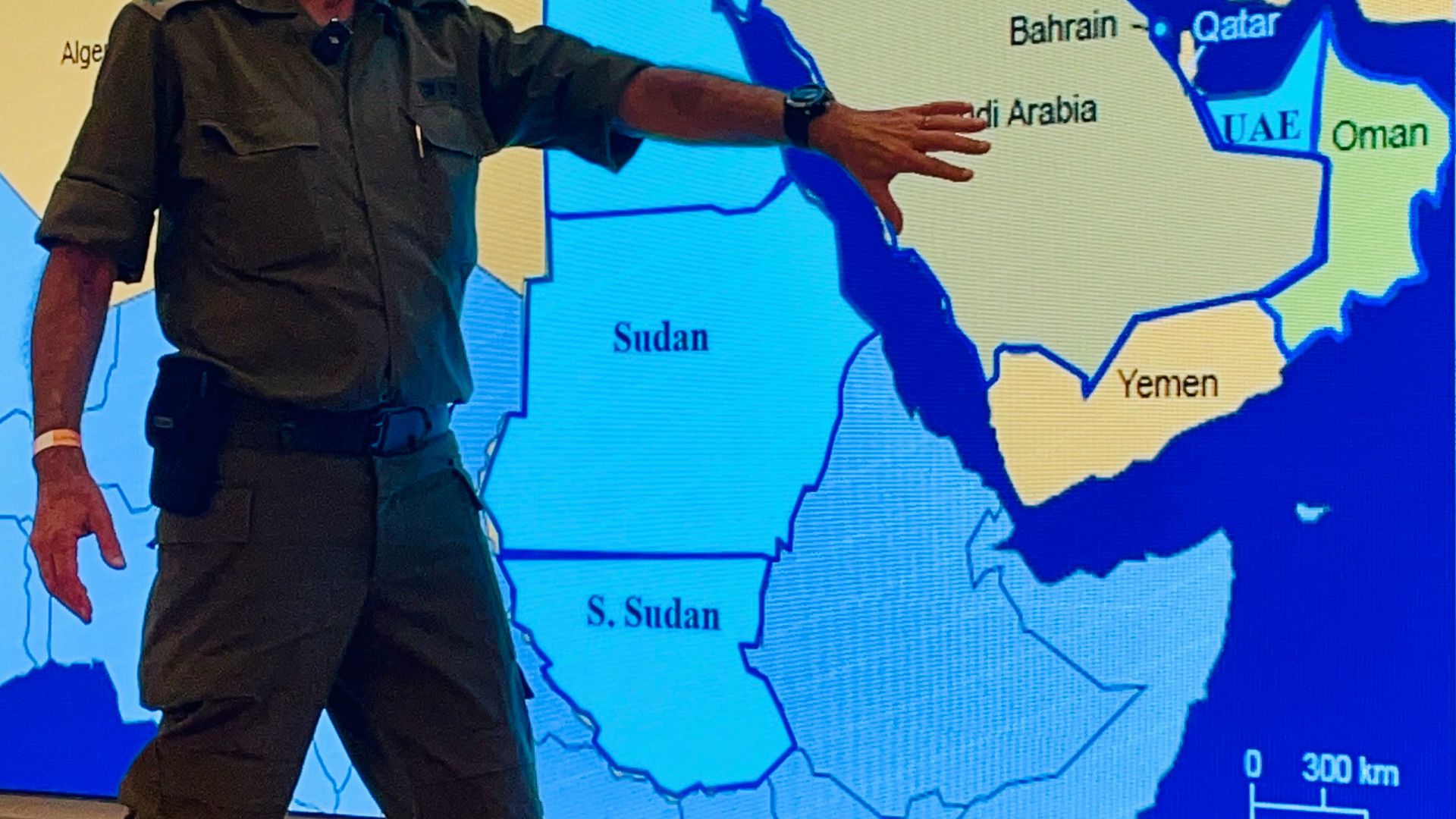
Let me explain. A few months after the October 7 attacks, I sat in a briefing in Israel with an IDF leader who had been present at nearly every major peace signing between Israel and its neighbors. The man carried history in the lines of his face. I went in expecting the usual Western version of events — wars, presidents, photo-ops, treaties that rise and fall like tides. But that wasn’t his story at all. According to him, the Arab-Israeli peace process hasn’t been a series of disjointed attempts. It’s been a long, steady build — each treaty resting on the last, each normalization drawing another neighbor into the possibility of calm.
In other words, not isolated scraps of paper, but one long, evolving covenant. Go back with me to 1948. Israel became a nation, recognized by nations outside the region but rejected by nearly all Arab neighbors. The Middle East was divided along ancient fault lines — tribal, ethnic, religious and political. Then, in 1979, something unthinkable happened. Egypt signed a peace treaty with Israel — not a truce, not a cease-fire, but recognition of Israel as a state. That alone fulfilled many prayers and overturned centuries of hostility. Egypt didn’t just sign a peace treaty — it normalized relations.
Then came 1994, and Jordan joined them. Two neighbors, two borders, two enemies turned into uneasy partners.
Then silence. Decades of silence.
Until 2020, when the Abraham Accords opened the floodgates — the UAE, Bahrain, Morocco, and Sudan all began normalizing relations with Israel. Whispers swirled that Saudi Arabia would join them in 2023, just before the war erupted. Multiple nations with multiple agreements, but one long arc.
This is what that IDF leader explained: the Middle East peace process has been one continuing document, amended, expanded and reinforced over time. Not new covenants each time — one long covenant being strengthened.
Sound familiar? Daniel 9:27 uses an unusual construction—“he will confirm a covenant with many.” Confirm, strengthen and reinforce — not create.
It is entirely possible — maybe even likely — that the covenant the final ruler confirms is not a new document drafted at the end of the age, but rather the long, slow and decades-long peace framework that has been building since Israel returned to the land.
And that leads us to Isaiah 28 — what the prophet called “the covenant of death.” Not because the nations signing it are insincere. And not because Israel is making peace. But because Israel, in its unbelief, places its security in alliances rather than in the God who brought them back. Not salvation — don’t mishear that. Scripture is clear: salvation is only through the Messiah. But in their national self-confidence, they lean on human promises instead of the Lord. Isaiah calls it a covenant of death because it will collapse on them when the final ruler breaks it.
So where does Trump’s 2025 plan fit into that? Here’s the answer — It fits the pattern. It fits the region. It fits the language. It fits the long story of normalization that Israel has walked since 1979, and because of all that, it deserves our attention.
But it is not yet the covenant. Prophecy gives us too many markers to mistake this moment for that one. Still, here’s the curveball: this plan, like the others before it, could be another stitch in the fabric of the covenant that will one day be confirmed. Another line in the long document. Another link in the chain that stretches from Sinai and Megiddo to wherever the final signature is inked.
None of this means we panic. None of this means we speculate wildly or chase internet prophets. It means we do what Jesus said in Matthew 24. We watch, we stay grounded in the text, we hold steady and we remember that these things don’t rise from thin air at the end — they build over time. Israel’s return built over time. Regional conflict built over time. Peace processes built over time. And one day, a ruler will step in, steady his hand over that old document and confirm a covenant with many.
When that day comes, the countdown begins. But today? Today, we watch because the ground under Israel has always been the stage where prophecy speaks loudest.
