



We’ve said it before: the end is a regional war. Israel at the center, Jerusalem encircled, coalitions of North and South colliding. But again, it doesn’t stay contained. Violence spills out into persecution and jihad. Deception spills out in lying wonders and a counterfeit “Jesus.” And then comes the third spillover — the one Revelation slows down and lingers on — economics. When Babylon burns, the markets collapse.
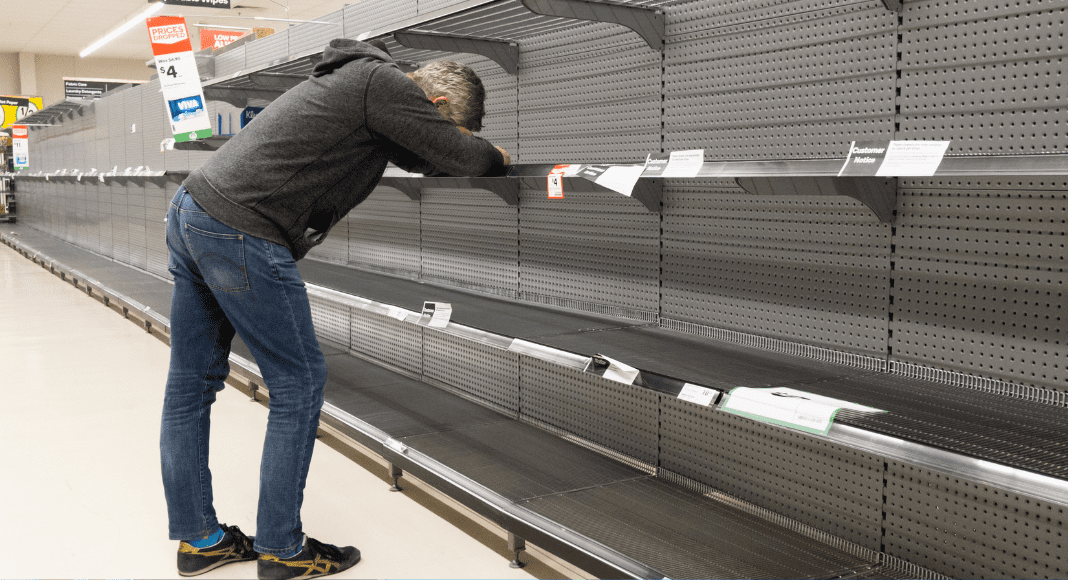
Matthew 24 warned of wars and rumors of wars and then added the word that bites deeper than any sword — famines. Not only from drought or disease, but from shattered trade, broken systems, empty shelves and hungry bellies. That’s the picture Revelation 17 and 18 paint in relentless detail — a mercantile empire stripped bare, the world’s markets brought to ruin in an hour.
John saw her — Babylon. A woman robed in scarlet, dripping with wealth, ruling over kings, riding the Beast for a time. She intoxicates the nations with her luxury. The merchants grow rich from her cargoes. Ships sail from her harbors to the farthest seas. But then, suddenly, the tables turn. The Beast and his horns hate her. They strip her. They burn her with fire. And in one hour, her wealth is gone.
The cries that follow are not of repentance. They are the cries of traders who’ve lost their profit. “No one buys our cargo anymore.” They recite the list like a manifest — gold and silver, purple and linen, spices, wine, cattle, even slaves and human lives. Captains stand offshore, staring at smoke rising from the city, crying out, “What city is like this great city?” Their lament is not over sin. It is over sales.
That’s the third spillover. Violence bleeds into the nations. Deception spreads like fire. And then economics comes crashing down. When Babylon falls, it won’t be local. It will rock every market and every port, every economy that feeds off her wealth.
Where is Babylon? Scholars argue. Some point to Rome. Some to a revived city in Mesopotamia. But look again at the profile — a city that makes merchants rich, that traffics in oil and luxury, that sits in the deserts of the South, that could collapse in an hour and take the world with her. The parallels to Saudi Arabia are chilling. The kingdom at the heart of oil wealth, the one that has built its fortune on petrodollars, the one that draws the merchants of the world to her harbors and towers. Strip her bare, burn her and the world economy starves overnight.
And it may not be Saudi Arabia alone. Daniel 11 still speaks of the South. Egypt leading, Cush and Libya at her heels. A southern bloc, aligned by wealth and trade, vulnerable to the northern flood. Perhaps Egypt and Saudi Arabia rise together in wealth, and fall together in fire. Perhaps Egypt will collapse militarily, while Arabia will collapse economically. However it plays, Revelation and Daniel both converge — the South falls, and with her, the markets of the world.
Think of it in real terms. Half the world’s oil flows through the South’s choke points — the Strait of Hormuz, the Bab el-Mandeb, the Suez Canal. Shut them down, torch them and the lights go out in Europe, Asia and America. The price of oil jumps, shipping stalls, markets freeze, debt buckles and suddenly the language in Revelation 18 — “in one hour her wealth is ruined” — reads not like poetry, but like a headline.
And we’ve already seen the foreshadowing. The oil shocks of the 1970s that rattled Western economies. The Suez Canal blockage in 2021 froze nearly 12% of global trade for a week. The Houthis strikes on tankers in the Red Sea in 2023 sent freight insurance and fuel costs soaring. Each one a trial run, each one showing how fragile the system is, how quickly the world shakes when the South’s choke points seize up. Revelation simply shows the final one — sudden, terminal, irreversible.
And it will not be a slow slide. Revelation says again and again — “in one hour.” Sudden. Shocking. Terminal. The world wakes up to find its mercantile hub in smoke, its trade dead in the water, its shelves empty. Babylon burns, and the merchants mourn.
This is why Matthew 24 names famine as one of the signs — war triggers collapse — collapse triggers hunger — hunger triggers chaos. And in the void, the Beast rises with a counterfeit solution. Revelation 13 shows the next step — the mark. No buying, no selling, no surviving without bowing to the system the False Prophet enforces. Babylon’s fall is not the end of the story — it is the setup for the Beast’s controlled economy.
So, the pattern holds. Violence spills into the world — war and persecution. Deception spills into the world — false signs and lying wonders. And now economics spills into the world — Babylon burning, markets ruined, famine spreading.
And here is the warning: don’t think of it as abstract. Believers will feel it in empty shelves and hungry children, in collapsed currencies and broken livelihoods. Faith will mean enduring not only the sword and the lie, but the scarcity that follows the fire.
We’ve traced the map. We’ve seen the armies. We’ve seen the lies. And now we’ve seen the markets. It all converges on the same fault line — Jerusalem at the center, Babylon burning in the South and the nations trembling in her smoke.
So, when John hears the merchants cry, when Daniel says Egypt will not escape, when Revelation repeats “in one hour,” the point is clear — the regional war spills into global markets, and the world’s wealth becomes dust.
And when that day comes, the remnant must be ready. Ready to endure, ready to refuse the mark, ready to cling to the true King when the shelves are empty and the markets are ashes. Because when He comes, the wealth of this world will look like dust compared to the kingdom He brings with Him.
