



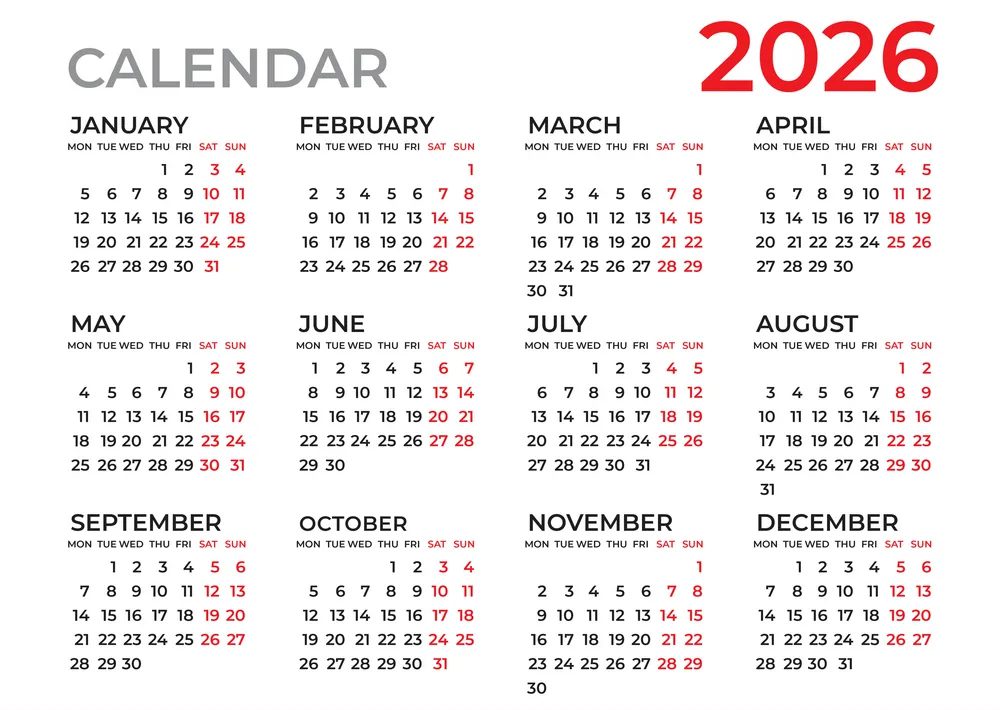
You have heard it before, “If you do not control your calendar, somebody else will.” As 2026 gets even closer, it is time to take a very close look at prayerfully planning out how you will redeem the time in the new year. The Greek word in Ephesians 5:16 for redeem carries the idea of “buying back” or “rescuing” time. Are you utilizing your time properly, ensuring that you are not wasting any of your God-given opportunities? You must consciously decide to prayerfully plan God’s work and then stick to His plan. Step back now and look at the new year with a desire to stay in step with Him.
What do you need to place on your calendar as the “big ticket” items that are once-a-year type events? Have you marked down your vacation on your calendar, and do you plan to protect that time? Have you scheduled the trainings or conferences you plan to attend? Here is another thought on time management: “He who fails to plan, plans to fail.” If you are not careful, you will live moment to moment, emergency to emergency, focusing only on what is right in front of you day by day. You will spend your time putting out the fires that begin to burn and “greasing the squeaky wheel.”
Time management must be proactive, not only reactive. Yes, emergencies will occur, and fires will need to be quenched, but you must address the critical need for biblical balance in your life, family and ministry. Poor time management practices will increase the pressure, stress and risk of being overwhelmed. Leaders must carefully consider the stewardship of their time by not only focusing on things they must do but on things they must stop doing. Are you asking God to direct and guide you in your 2026 calendar? Are you asking Him for wisdom in how to carry out your daily tasks?
Place your annual events on your calendar and consider also identifying quarterly events that will not happen if you do not write them down. Plan and schedule a prayer retreat every three months. This is where you will set aside a time to get away and be alone with the Lord. A personal or leadership prayer retreat is something you refuse to place on the back burner by writing it down on your calendar. All of us are incredibly busy, and it is easy to get trapped in always doing the urgent rather than the important. Is anything more important than the time you can spend alone with the Lord as He did with His Father?
You should also put down the monthly and weekly meetings that you know will take place and require your presence. Yes, the calendar can fill up fast, and that is why prayerful planning and stewarding your time are so vitally important. What other meetings do you need to consider that might be easily overlooked? Do you have a regular rhythm of checking in with your key leaders? Do you have these leaders on your radar to make sure you answer their questions and/or facilitate their growth as leaders? A great question to regularly ask them is, “What can I do to help you be successful?”
The best use of your time is developing other leaders around you by preparing them to minister with you. Ephesians 4:11-12 makes it clear that God has called church leaders to equip others to do ministry. Just because you are capable does not mean you should do it. Saying no to good things gives you the ability to say yes to the best things. Busy work can distract you from the most important work. Ministry opportunities are endless, and just because you are asked to do something or see the need, it does not mean you should. You think, “Well, if I don’t do it, it won’t get done.” Maybe it doesn’t need to be done?
What times do you need to schedule with yourself? Have you scheduled your weekly required time for your sermon preparation? Have you planned out your sermon series for the year? Are you coordinating with others who need to know? Then, at the end of each quarter, consider refocusing on where God is directing you to refresh God’s vision and heart in that series. There is a lot of wisdom in knowing what you will be preaching for the entire next year for better direction, continuity and preparation. Consider blocking off at least two four-hour blocks of time in your week for sermon preparation.
Here is another idea that will help you. Schedule a day once a month as a “work on the work” day. This is where you can get a 30,000-foot view of how things have gone, how things are going and what is next. What did you plan on doing that hasn’t happened yet? How well are you communicating your vision and plans? What conflicts have arisen, and are you addressing them effectively? A workday once a month is great, but you also want to schedule an hour once a week to evaluate where you are at and what items need your attention the most. Remain focused on your priorities, not just the urgent.
The time you spend now planning will save you time in the future, and you will have to work hard to keep things as simple as possible. Simplicity is important because complexity is not scalable. It has been well stated that “Simplicity creates growth, and then growth creates complexity.” How do you do that? Begin by pulling out your calendar and scheduling planning time. Prioritize the most important items. Be proactive and do not delay another moment. Quit talking about it and thinking about it. Take charge by scheduling time to plan for your future ministry effectiveness. Do it now.
One more thing, decide now if you want to work harder or smarter. There is nothing wrong with both. Colossians 4:5 says, “Walk in wisdom toward them that are without, redeeming the time.”
