



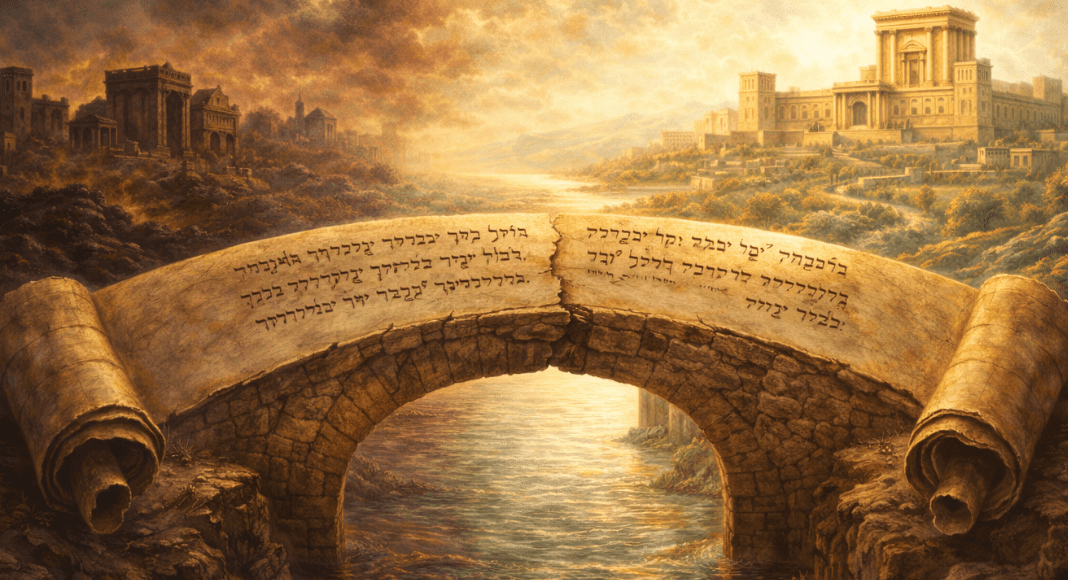
If you’ve stayed with me through this series, you can feel the shift. Prophecy is less a foggy puzzle, more a single storyline with a spine you can trace with your finger. That’s because we’ve done what Jesus did — started with Moses, then the Prophets, then let the rest fall in behind. And when you start with Moses, you find the Bible’s prophetic backbone isn’t random predictions — it’s covenants, plural. The Abrahamic Covenant is promise: seed, land, blessing, the nations. The Mosaic is conditional: blessing for obedience, curse for rebellion, life in the land at stake. The Davidic is kingdom: a forever throne, a righteous King to come. The New Covenant is promised renewal — new heart, Spirit, forgiveness, covenant peace.
Together, that’s the spine, but here’s the question that quietly shapes the whole reading: How does the New Covenant relate to the rest?
Does it replace them, merge them, upgrade them, or cancel them?
Most confusion in prophecy comes from getting this answer sloppy or shallow. So, let’s nail it down for real.
If you want to use the word “replace,” use it carefully. The only covenant the New Covenant actually replaces is the Mosaic — specifically, its role as the administration of God’s people. Jeremiah is crystal clear: “Not like the covenant I made with their fathers… my covenant that they broke.” (Jer. 31:32 ESV). That’s Sinai, that’s Moses. The Mosaic was always conditional. Blessing for obedience, curse for rebellion, and exile when the curse fell.
The problem wasn’t God’s law — the problem was Israel’s heart. The Law could command, but it could not make you love. Moses saw it coming. So did the prophets. What the Mosaic couldn’t deliver — lasting faithfulness, inner change, obedience from the heart — the New Covenant brings — forgiveness, cleansing, a new heart, and God’s Spirit within. Not a lower standard — a deeper power. “I will put my Spirit within you, and cause you to walk in my statutes…” (Ezek. 36:27). The standard stays. The mechanism changes. There are no longer external commands with curses as the covenantal administration — now there is internal transformation and Spirit-empowered obedience. He gives the heart that can finally keep it. That’s how God’s people can dwell securely — covenant loyalty from the inside out, not just the outside in.
This replacement isn’t a bulldozer. The New Covenant doesn’t flatten the Abrahamic promise. It fulfills and extends it.
Abraham’s covenant was God’s word alone. In Genesis 15, God walks through the pieces. Abraham stands and watches. That means nothing — not even Israel’s centuries of failure — can void God’s oath. The New Covenant doesn’t erase Abraham. It secures Abraham and opens the blessing wide. It brings in us, the Gentiles. We’re adopted in, we share in the Spirit, and become heirs. That’s Abraham’s promise spreading out through the Messiah, the seed, and the Spirit.
But the New Covenant also makes Abraham’s vision possible — a faithful people, finally able to live in blessing instead of sabotaging it. The promise was always there. Now the power is too. And the same logic stands for David. The Davidic covenant is God’s promise of a forever throne, a forever King. The prophets never said exile ended it. Better said, exile was the dark valley before the Promised Messiah — the Branch — would come.
But here’s the catch: a righteous King ruling over a rebellious people is a recipe for repeated disaster. That’s Israel’s history in a sentence — the New Covenant changes the story — it produces citizens fit for the King.
Ezekiel weaves it all together — Davidic ruler, covenant of peace, God among His people, people walking in faithfulness. The New isn’t about just “getting saved,” it’s about forming a people who can actually live under the King, in the land, in the age to come, without going back to the old spiral. It doesn’t replace David. It empowers David’s kingdom to become everything God promised.
You can’t skip over Israel here. The New Covenant is first promised to “…the house of Israel and the house of Judah” (Jer. 31:31). That’s not politics — that’s Bible. Gentiles don’t take Israel’s place. They’re brought near, grafted in. They share in the blessings — Spirit, adoption, forgiveness, inheritance — because the Messiah, the Seed of Abraham, Son of David, opened the way. The New Testament holds both truths — Israel-centered promise and Gentile inclusion. Blessing to the nations through Abraham’s Seed, a kingdom that embraces the world under the reign of Israel’s King.
If you think the New Covenant is just a personal salvation plan, you shrink prophecy down to a private devotional. But that’s not what the prophets saw. The New Covenant is God’s tool to forgive, cleanse, transform, restore, empower, and dwell with His people. It prepares a people fit for the reign of the King. That’s the point — not just now, but for the age to come. Spirit-empowered people, living securely in the land, under the Davidic King, alongside nations grafted into Abraham’s blessing. That’s the covenant story. That’s where prophecy points. That’s the age to come that Jesus and the apostles saw on the horizon.
Next, we’ll widen the frame to encompass how it fully connects with Israel being restored, the Gentiles being included, the Promised King reigning, the covenant promises breaking into history, and creation itself being renewed — when Eden is restored — God with His people forever. Because prophecy doesn’t start at the end — it starts with Moses, and ends with a King and a people, at home at last.
